Moving to Florida? Don't Assume Your Old Estate Planning Documents Will Work


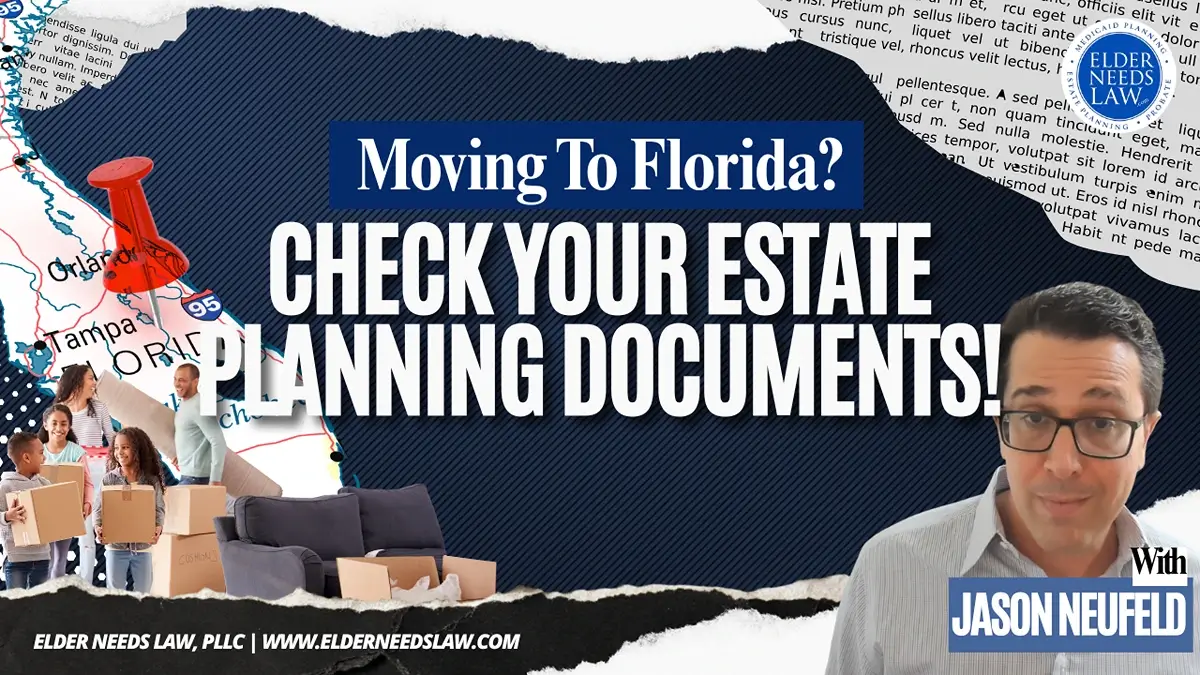
If you've recently relocated to Florida, or you're getting ready to make the move, you might be wondering whether the estate planning documents you signed in your old state, your will, power of attorney, healthcare surrogate designation, or trust, will still hold up here. The short answer is: maybe. But "maybe" isn't good enough when it comes to protecting yourself and your family, and here's why.
The Legal Answer vs. The Real-World Answer
Technically speaking, Florida law will honor a power of attorney that was properly signed and executed in another state. So if you're asking whether you're legally required to sign a brand new Florida power of attorney the moment you cross the state line, the answer is no.
But should you get one anyway? Absolutely, yes.
There's a big difference between what the law says on paper and what actually happens when you walk into a bank or a hospital with an out-of-state document in hand. Bank tellers, hospital administrators, and local government office staff see Florida documents day in and day out. When they're handed something that looks unfamiliar, it tends to raise a flag, and that flag almost always means delays, extra paperwork, and frustration at exactly the moment you can least afford it.
Why Out-of-State Documents Create Extra Headaches
Here's what this often looks like in practice. If a client's power of attorney was signed in another state and that client no longer has the ability to sign a new one, we have to track down a lawyer licensed in that original state and get a written letter, on their letterhead, confirming that the document was executed properly, that it's a valid power of attorney, and that it's durable, meaning it still holds up even if the person who signed it has since lost capacity.
That attorney also has to confirm, in writing, that the power of attorney is broad enough to cover whatever it is we're trying to accomplish. And this is where things get tricky, because not all powers of attorney are written the same way.
Plenty of people have a power of attorney that works just fine for everyday tasks, like managing a bank account. But that same document may fall short when it comes to more advanced Medicaid planning tools, like setting up a personal services contract, funding an asset protection trust, establishing a qualified income trust, or signing a Medicaid-compliant promissory note. If the original document doesn't clearly authorize those kinds of actions, we're stuck, whether the power of attorney was signed in Florida or somewhere else.
When it comes to an out-of-state power of attorney specifically, we have to get that out-of-state lawyer to confirm the document allows for these more complex strategies under that state's law. Only then can we move forward under Florida law. It's a workable path, but it's slow, and it adds cost and stress during a time when families are usually already dealing with enough.
The Same Goes for Trusts
If you're relying on a trust that was created in another state, we generally want to change its venue to Florida. That way, Florida law governs how the trust operates going forward, which keeps things consistent and predictable for you and your family here.
Our Recommendation: Get Florida-Specific Documents
If you have the cognitive ability to do so, our advice is simple: get a fresh set of estate planning documents drafted specifically for the state you now call home. If you're moving to Florida, that means working with a Florida-based elder law and estate planning attorney to put together documents that Florida institutions will recognize right away. And honestly, we'd give the same advice in reverse, if you're leaving Florida for another state, get new documents drafted by a lawyer licensed there.
This isn't about creating unnecessary paperwork. It's about saving your family from roadblocks down the road, when time and clarity matter most.
Ready to Put Florida-Based Documents in Place?
Whether you've just relocated to Florida or you're planning ahead for a move, our office can help you put together a complete, Florida-specific estate plan, including your durable power of attorney, healthcare surrogate designation, will, and trust documents.
Visit us at elderneedslaw.com or medicaidplanninglawyer.com to schedule a consultation.
You can also pick up Jason Neufeld's book, "Medicaid: Paying for Some of Your Long-Term Care Expenses," available on Amazon, for a closer look at how Medicaid planning works in Florida and how the right documents can make all the difference for your family.