
What Is a Pooled Special Needs Trust — and How Does It Work with Florida Medicaid?


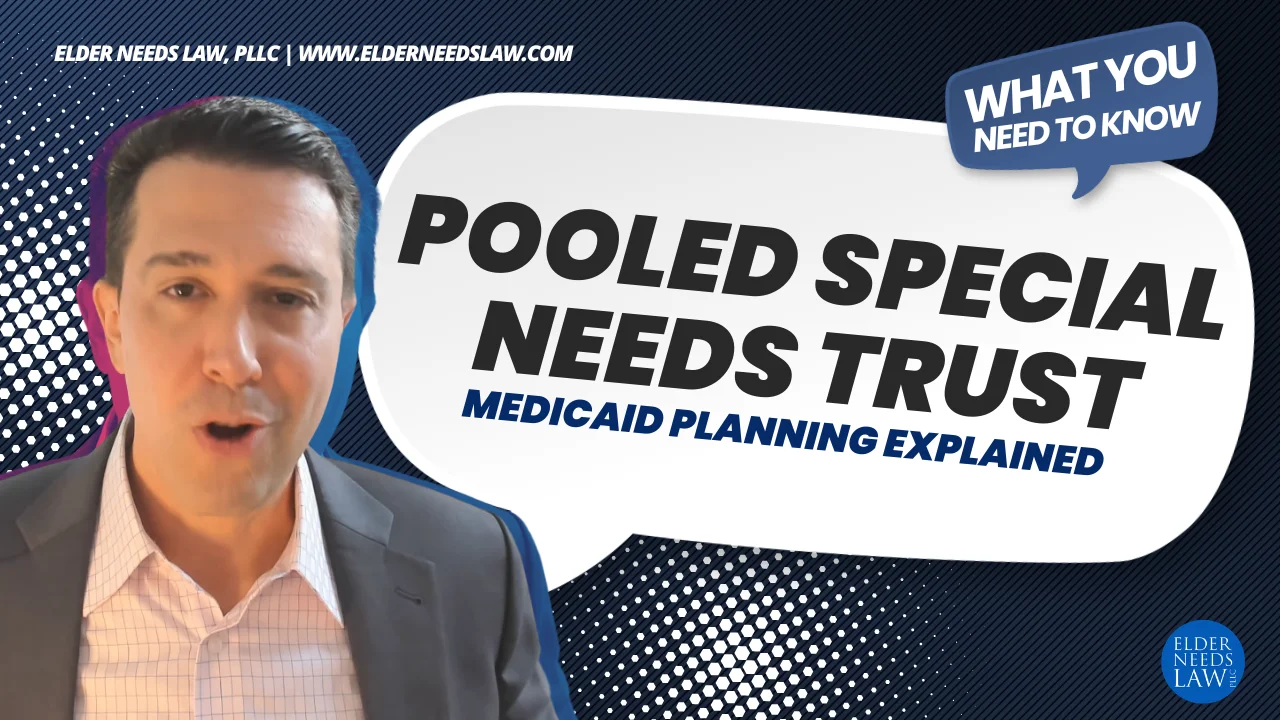
By Jason Neufeld, Board-Certified Elder Law Attorney | Elder Needs Law, serving all of Florida
If you or a loved one has too much in assets or income to qualify for Florida Medicaid — but you don't want to wait five years, go broke, or sell the family home — you're not out of options. There are several legal tools that can help, and one of them is the pooled special needs trust (PSNT).
As a board-certified elder law attorney, I want to be upfront: there's no perfect solution in Medicaid planning. Every tool has trade-offs. The pooled trust is one piece of a larger strategy — not a standalone fix — but it can be a powerful one when used in the right situation.
First, a word about trusts in general
There are many types of trusts — revocable trusts, irrevocable trusts, Miller trusts, living trusts, testamentary trusts — and they each serve very different purposes. Having a trust doesn't automatically protect your assets when it comes to Medicaid.
For example, money sitting in a revocable trust is not protected for Medicaid purposes. Florida Medicaid considers it a countable asset whether it's in your name or your revocable trust's name — it doesn't matter. That's why the type of trust matters enormously.
So what makes a pooled special needs trust different?
A pooled special needs trust has a special legal status under both state and federal law. Under Florida Medicaid rules, two things are true about money you transfer into a qualifying PSNT:
- It's not treated as a gift. That means you won't face a Medicaid penalty period, and you can make the transfer even within five minutes of applying for Medicaid.
- The funds don't count against you. Money in a pooled trust is not counted as a "countable asset" when Florida Medicaid determines whether you're eligible.
Florida Medicaid limits countable assets to just $2,000. The pooled trust essentially gives you a protected account — like a savings account in your name — that sits outside that $2,000 ceiling. You can hold substantially more in the trust while still qualifying for Medicaid-covered care at home or in a facility.
What can the money in a pooled trust be spent on?
The short answer: nearly anything you need or want. The trust funds can pay for things like:
- Rent or mortgage payments
- Property taxes and HOA fees
- Healthcare costs that Medicaid doesn't cover
- Assisted living facility costs beyond the Medicaid-covered portion
- Travel and vacation expenses
- Credit card bills
The funds can't be gifted away, but as long as the money is being spent on something the Medicaid recipient genuinely needs or wants — and it's reasonable — the pooled trust trustee has a fiduciary obligation to pay it. (There's a note about SSI recipients, which is a separate topic we'll cover in another video.
But, in short, there are some shelter expenses, i.e. in-kind support and maintenance, that trusts cannot pay for unless the beneficiary is willing to accept a reduced SSI check)
The honest trade-offs
What works in your favor:
- Transfers are not penalized as gifts
- Funds aren't counted as Medicaid assets
- Can be funded at any time — even while applying
- Flexible spending on needs and wants
- Keeps you financially liquid
What to be aware of:
- Subject to Medicaid estate recovery after death
- Must be managed by a professional nonprofit trustee
- Annual fees (typically 2–3% of the account balance)
- No direct cash payments — bills are paid to third parties
What is Medicaid estate recovery, and why does it matter?
The biggest drawback of the pooled trust is that it comes with a Medicaid payback obligation. When the Medicaid recipient passes away, the state of Florida is entitled to be reimbursed from whatever remains in the pooled trust account. The trustee is legally required to notify Medicaid, and that bill must be satisfied before any remaining funds go to the family.
There's a limited exception: if another family member also receives Medicaid and has their own pooled trust account, it may be possible to link the two accounts so that one person's share rolls into the other's. But in most cases — particularly with a single parent whose adult children are healthy — estate recovery applies.
This is exactly why we typically combine the pooled trust with other Medicaid planning strategies that don't carry a payback obligation. The goal is to structure everything so that very little — or nothing — remains in the pooled trust at the end, leaving nothing for the state to recover.
Understanding the fees
A pooled trust must be managed by a professional nonprofit organization — not a family member, not your spouse, not your attorney. In Florida, there are roughly 30 such organizations. I work with my two preferred trustees, both of whom have strong reputations among elder law attorneys statewide, carry appropriate insurance, and provide annual audits.
These organizations are nonprofits, but they're not free. Using a $50,000 transfer as an example: there's typically a one-time enrollment fee of around $500, so you're effectively starting with $49,500. From there, the annual management fee runs roughly 2–3% of whatever balance remains — on $50,000, that's about $1,500 in the first year. As the balance is spent down over time, the annual fee decreases accordingly.
You submit invoices and bills to the trustee, and they pay those vendors directly from your account. There are no cash disbursements. For the protection and management they provide, most clients find the fees very reasonable once they see what's at stake.
Is a pooled special needs trust right for your situation?
That depends on your full picture — your income, your assets, your family situation, and what you're trying to protect. A pooled trust is rarely the only strategy I bring to a consultation. We look at everything together: what tools are available, what their individual trade-offs are, and how they work in combination.
If you'd like to talk through whether this makes sense for you or someone you care for, reach out to our office. We serve the entire state of Florida and can walk you through the full range of options.
🌐 ElderNeedsLaw.com 🌐 MedicaidPlanningLawyer.com 📖 Get the Book on Amazon
Legal disclaimer: This article is provided for general informational purposes only and does not constitute legal advice. Florida Medicaid rules are complex and subject to change. Please consult a licensed Florida elder law attorney before making any decisions about your Medicaid planning strategy. Reading this article does not create an attorney-client relationship with Elder Needs Law or Jason Neufeld.
Changes are coming to Florida probate law! Beginning July 1, 2026, Florida’s summary administration limit is increasing from $75,000 to $150,000, allowing many more families to qualify for a faster and simpler probate process. This update means less time in court, lower costs, and fewer headaches for loved ones handling an estate after a loss. For many families, this could make settling a small estate much more efficient and affordable. If you have questions about how these new rules may affect your family or estate plan, schedule a consultation.